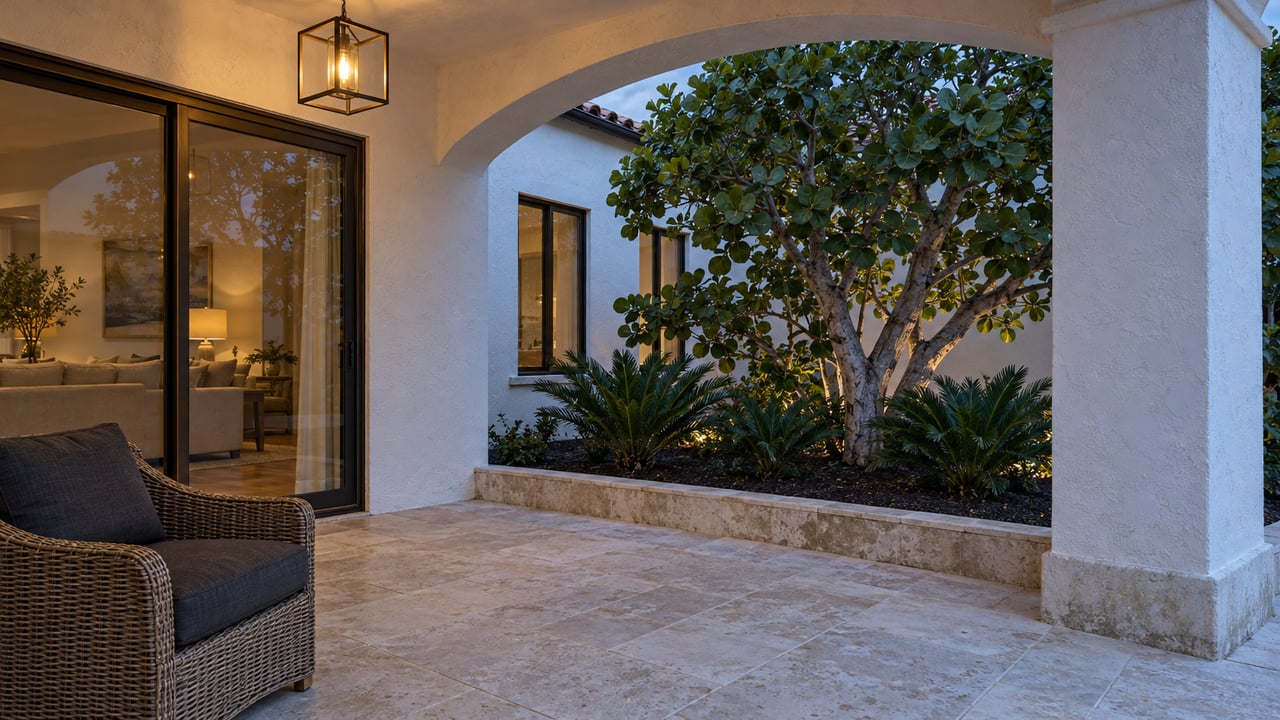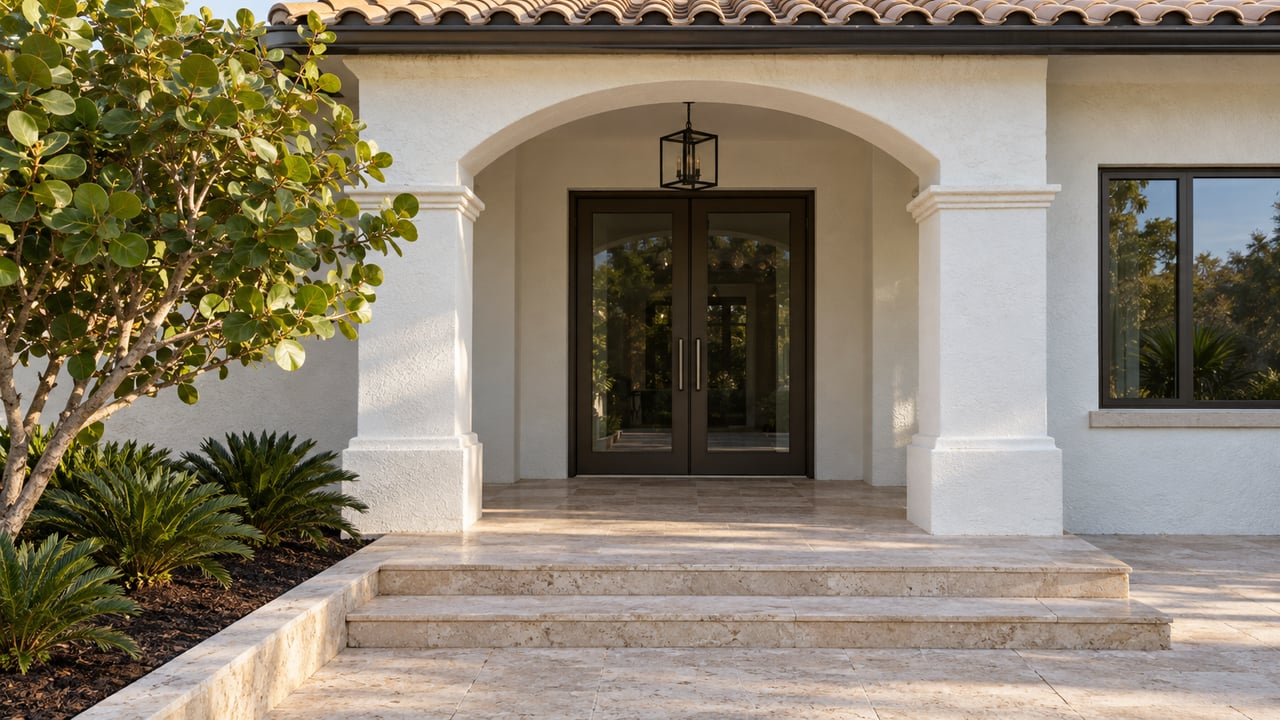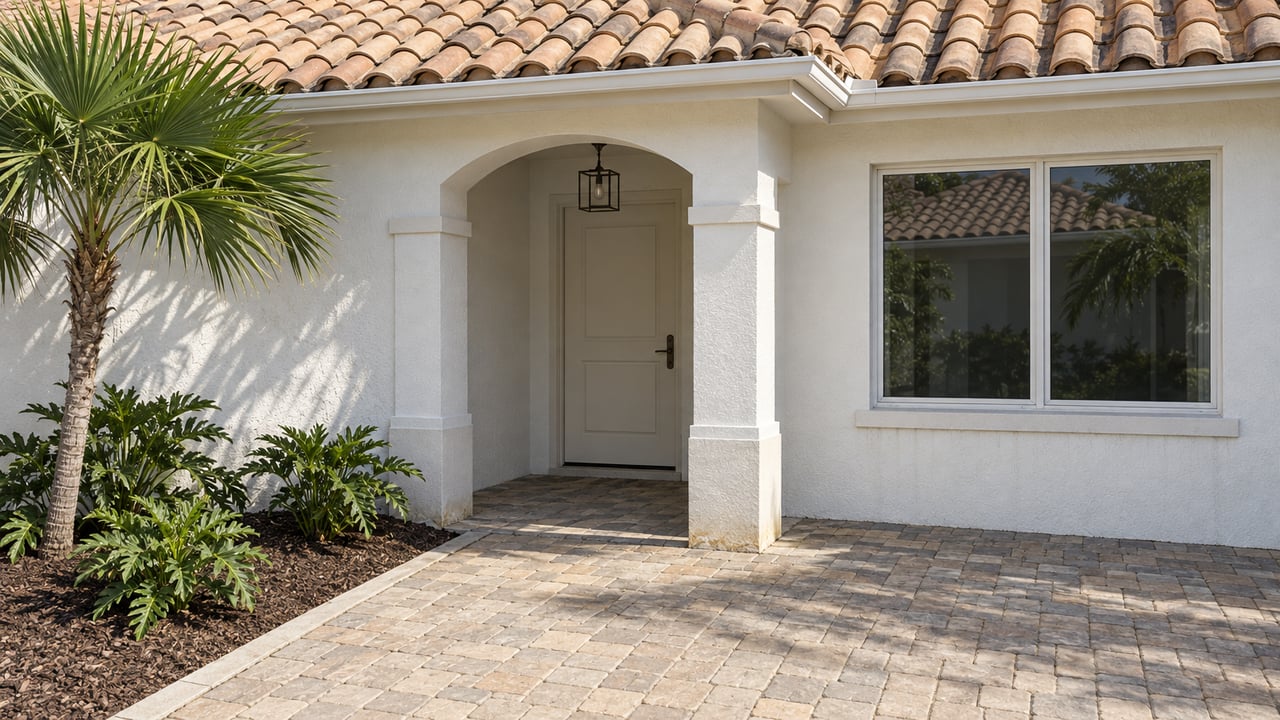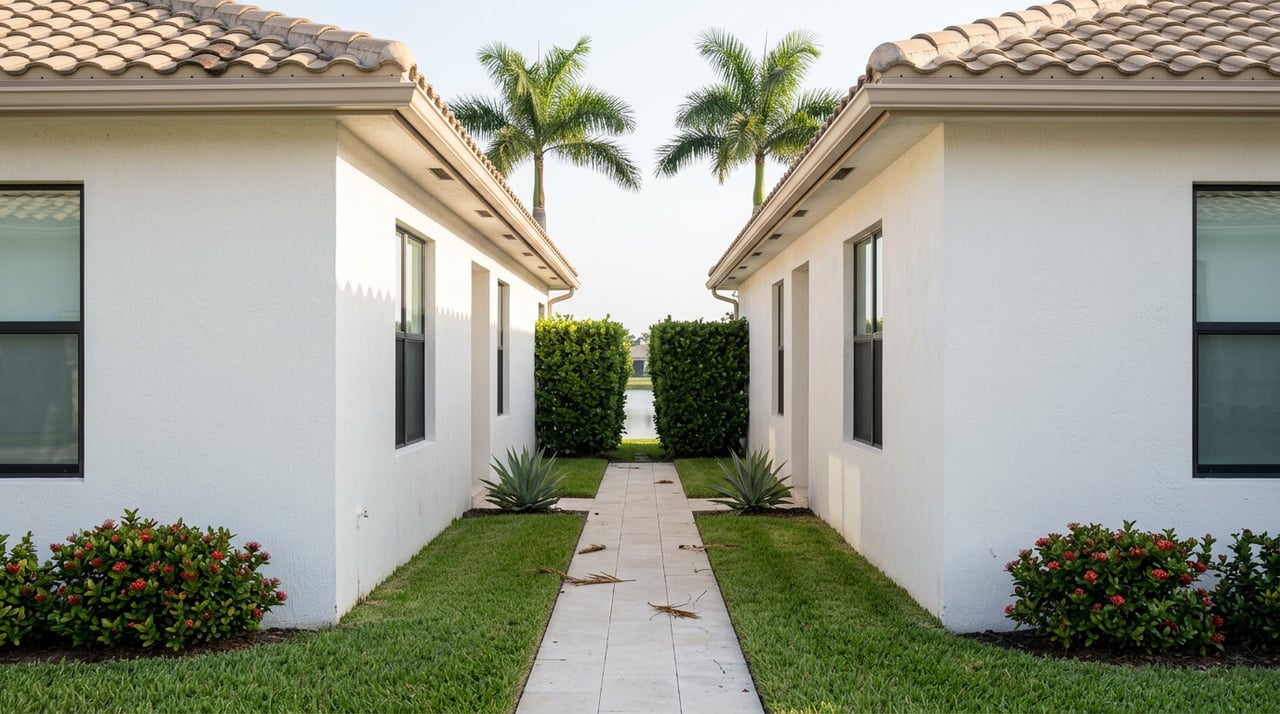
Walk the golf cart path between Bay Isle and Bay Pointe inside Broken Sound and you would be hard pressed to say which village you are in. Both were built by Arvida in the 1990s. Both offer three and four bedroom single-family homes with two-car garages in the same 2,800 to 3,500 square foot band. Both put most of their owners on a private pool and a water or fairway view. On paper, these are twin villages.
So when a buyer pulls up recent pricing on each and finds Bay Isle homes clustering near $415 a square foot while Bay Pointe's handful of active listings sit closer to $464 a square foot, spanning $1,295,000 to $1,500,000, the instinct is to ask which village is worth more. That is the wrong question. The right one is why a nearly identical product is generating two different numbers at all, and what that gap actually tells a buyer trying to decide between them.
The Specs Line Up Almost Exactly
Here is what both villages share before a single dollar enters the conversation.
Bay Isle | Bay Pointe | |
|---|---|---|
Homesites | 28 | 60 |
Built by | Arvida, 1990s | Arvida, early 1990s |
Bedrooms | 3 to 4 | 3 to 4 |
Living space | 2,800 to 3,500 sq ft | 2,800 to 3,500 sq ft |
Garage | 2-car | 2-car |
Typical exterior | Private pool, water views on nearly every lot | Private pool, lake and/or golf views on most lots |
The floor plans were drawn by the same builder in the same decade for the same buyer profile. Neither village has new construction to distort the comparison. Both fall inside Broken Sound's mandatory club structure, so neither carries a membership advantage over the other. If price were purely a function of square footage, bedroom count, and build era, these two villages would land in roughly the same place. They do not.
The Gap Is Real. The Explanation Isn't Superiority.
Bay Isle has 28 total homes. Bay Pointe has 60. At any given moment, only a small handful of those homes are actually on the market, often two to four in each village. That is the detail that changes everything about how to read the pricing.
When a village's active listing pool is that small, one renovated kitchen, one golf-frontage lot, or one seller who priced aggressively can shift the whole average by tens of thousands of dollars per sale. A $464 per square foot reading out of Bay Pointe right now is not a verdict that Bay Pointe commands a premium over Bay Isle. It may simply mean that whatever two or three homes happened to be listed there this season carried more upgrades or better lot placement than whatever happened to be listed in Bay Isle at the same moment.
Compare that to the wider Broken Sound market, which offers a useful control group. As of July 2026, the community's median home price sat at $899,000, up 14% year over year, drawn from 18 active listings ranging from $375,000 to $3,895,000. Homes were selling in an average of 52 days. Eighteen listings is still a small number, but it is large enough that one unusual sale barely moves the median. Shrink that same math down to a 28-home or 60-home village, and the same single outlier sale can swing the average dramatically. That is the mechanism behind the Bay Isle and Bay Pointe gap. It is not a market signal. It is a sample size problem wearing a market signal's clothing.
What Actually Separates the Two Villages
If square footage per dollar is not the real differentiator, what is?
Start with frontage odds. Bay Isle's smaller footprint means nearly every one of its 28 lots backs directly to water. Bay Pointe's larger layout spreads 60 homes across more ground, so lake or golf frontage is common there but not guaranteed on every lot the way it functionally is in Bay Isle. A buyer who wants a water view without negotiating for it lot by lot has better odds walking into Bay Isle first.
Then there is scarcity itself. Fewer total homes means fewer chances to buy. A village of 28 will simply produce fewer listings per year than a village of 60, all else equal. For a patient buyer who has time to wait for the right unit, that scarcity is a minor inconvenience. For a buyer on a relocation timeline, it means Bay Pointe's larger inventory pool may actually be the more practical starting point, regardless of what the per-square-foot number says this month.
Carrying costs also deserve a second look, and they vary by the specific home rather than by village name. We've walked through the full cost stack for Broken Sound ownership in our guide to membership, dues, and fees, including the Broken Sound Master Association's $4,000 compliance fee due at closing and real listing examples showing property tax bills ranging from $4,906 on one home to $3,569 on a condo in the same community. Those differences show up property by property, not village by village, which is one more reason a headline average from either Bay Isle or Bay Pointe tells you less than it appears to.
Three Questions Worth Asking Instead of the Average
Before anchoring an offer to either village's current pricing, a buyer is better served asking:
How many of the homes currently listed in this village actually have confirmed water or golf frontage, versus sitting on an interior lot? The village-wide description does not apply to every individual homesite.
What did the last three sales in this specific village close for, not list for? Closed prices with dates attached tell you more than a snapshot of whatever happens to be active today.
What is this particular home's HOA and club equity structure? Broken Sound's master association sets the baseline, but village-level dues and any golf equity requirements can differ from one listing to the next inside the same 28- or 60-home pool.
A village of 28 homes does not generate a market. It generates a handful of data points wearing a market's clothing, and the buyer who understands that difference negotiates from a stronger position than the one comparing headline averages across a lunch table.
Bay Isle Or Bay Pointe: Which Fits, Not Which Wins
The honest answer to "which village is the better buy" is that the question itself is built on a number too thin to carry the weight. Bay Isle offers near-universal water frontage inside a tighter, quieter footprint of 28 homes. Bay Pointe offers a larger inventory pool with strong odds of a lake or golf view, built across the same era by the same hand. For readers who have already spent time on our earlier look at Bay Pointe's patio-home lifestyle, the physical product comparison holds. The deciding factor is rarely the village. It is the specific lot, the specific renovation history, and the specific carrying costs attached to the one home you are actually considering.
That is the kind of detail that does not show up on an aggregator dashboard. It shows up when someone who lives inside Broken Sound walks the lot with you, checks the frontage against the plat, and pulls the actual closed comps rather than whatever happens to be listed this week.
FAQ
Do Bay Isle and Bay Pointe require the same club membership? Both villages sit inside Broken Sound's mandatory membership structure, so the club-level requirement is the same. Specific equity categories and costs can still vary by home and should be confirmed for the individual property you are considering.
Are all Bay Isle homes on the water? Most are, given the village's compact 28-home footprint, but water frontage should be confirmed lot by lot rather than assumed from the village's general reputation.
How often do homes actually come up for sale in these villages? Rarely, by design. With only 28 homes in Bay Isle and 60 in Bay Pointe, annual turnover is limited, which is exactly why relying on a real-time snapshot of two or three listings can be misleading without local context on what has sold recently and why.
If you are weighing Bay Isle against Bay Pointe, or any two villages inside Broken Sound that look alike on paper, Anne De Marzo can walk the specific lots with you and pull the closed comps that actually matter. Request a private tour and community introduction to see what the numbers alone won't show you.
This article is general information, not legal, tax or financial advice. Consult a qualified professional about your situation.