Ask anyone who has closed on a home in Cloisters and they will tell you the hardest part wasn't the offer, the inspection, or even the club application. It was a form most buyers never heard of until their lender mentioned it, usually well into the contract period, usually with a request for documents nobody had gathered yet.
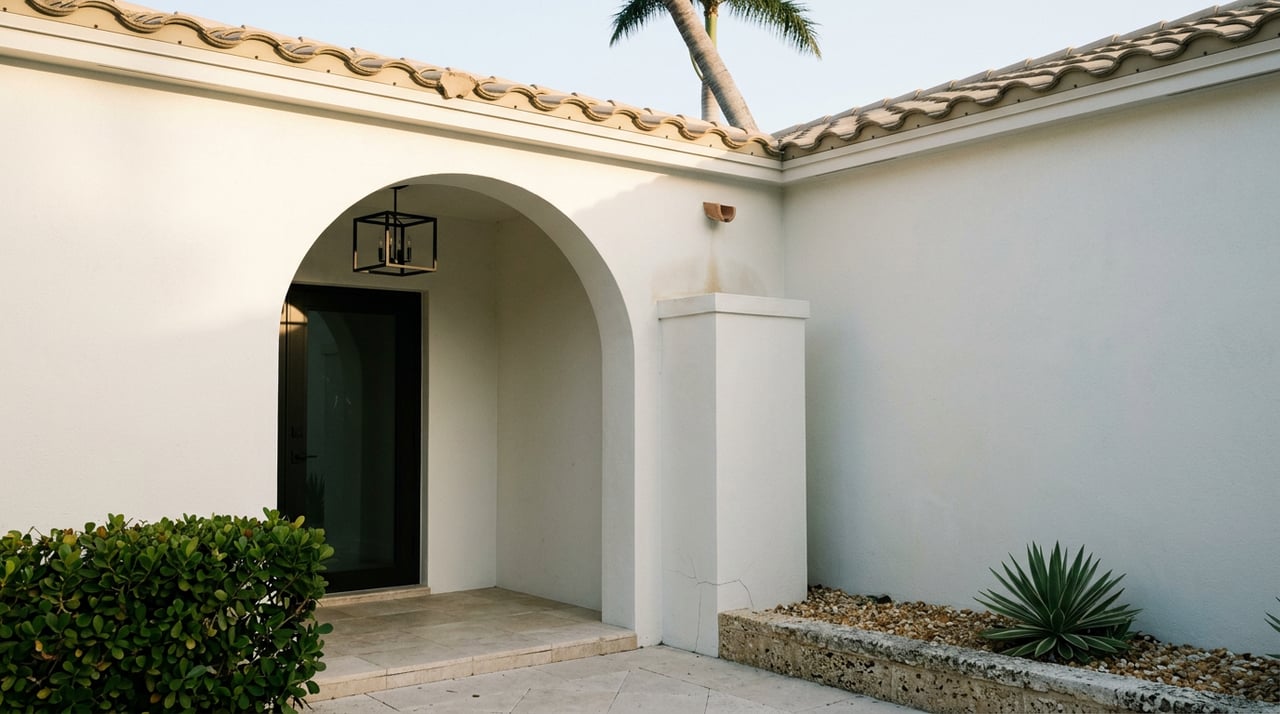
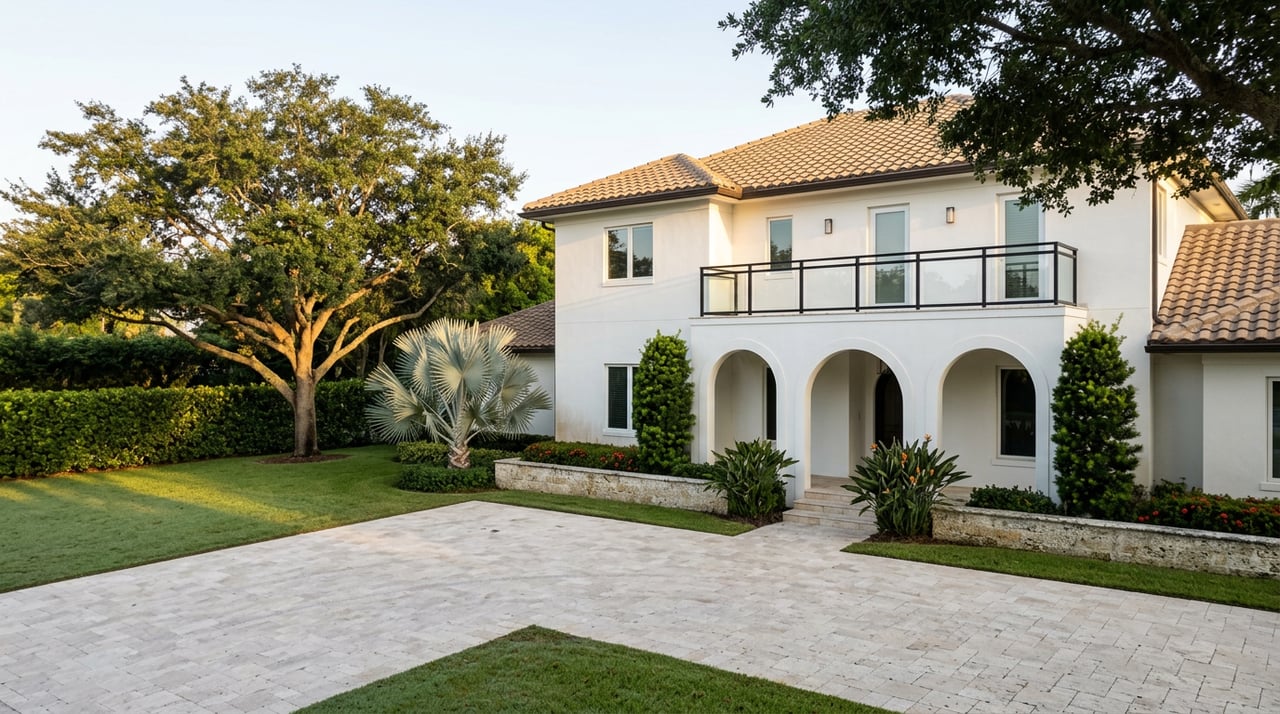
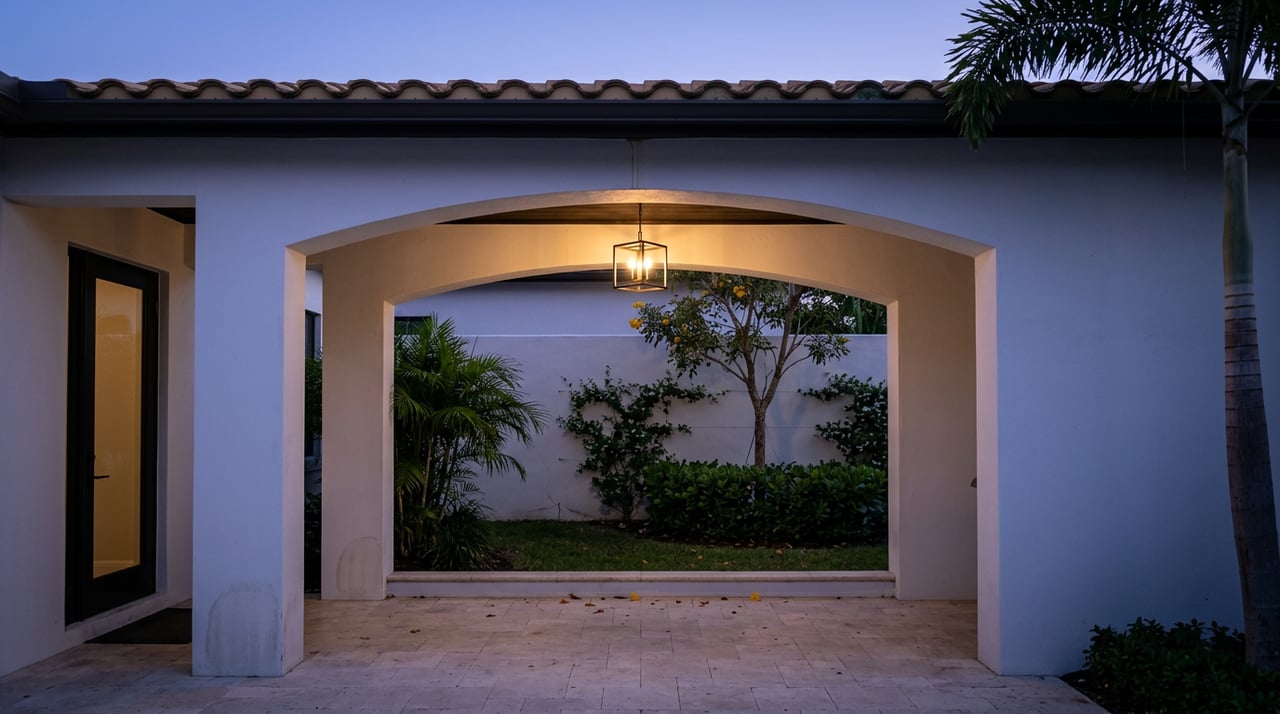
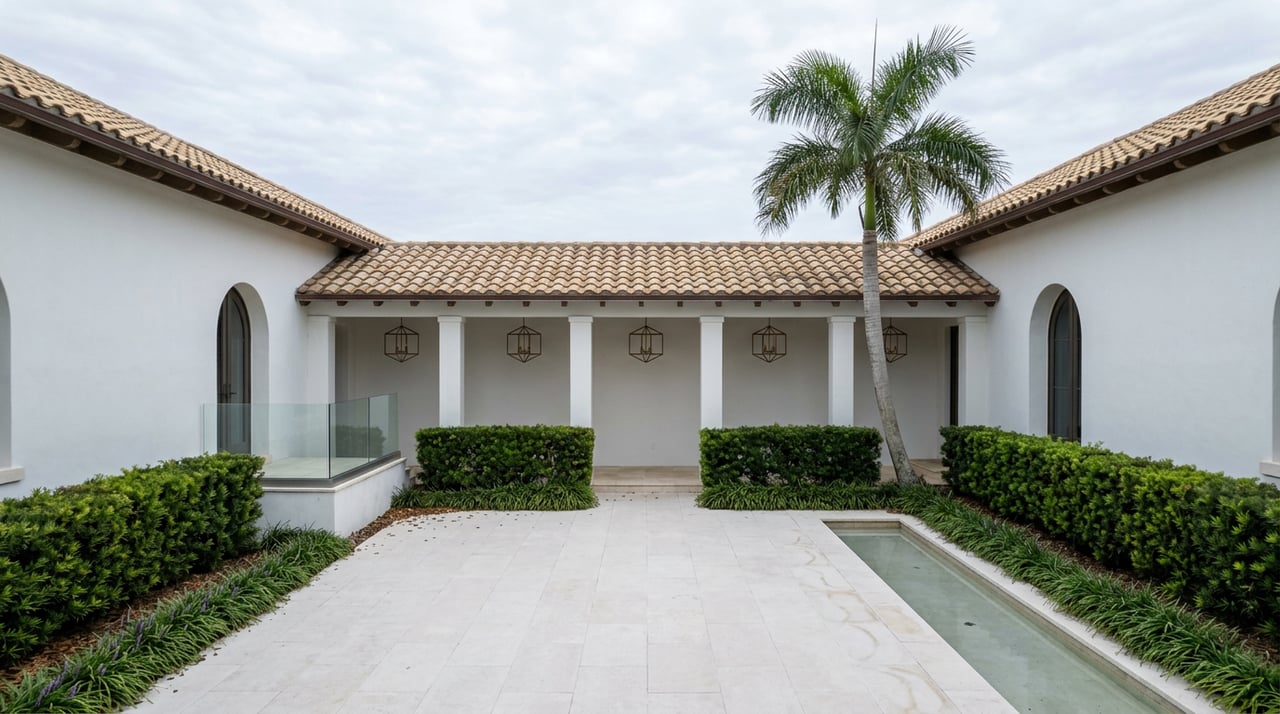
Cloisters is one of Broken Sound's smallest villages, just 39 homes built by Arvida in the late 1980s, tucked behind the club's main gates with five different floor plans and private pools on most units. Listings describe these residences with two words that sound interchangeable but aren't, at least not to a mortgage underwriter: villa and townhome. That distinction, and the structural reality behind it, is where financing a home in Cloisters starts to diverge from financing a detached single-family house elsewhere in the community.
What "Attached" Actually Changes
Several brokerage descriptions of Cloisters call the homes attached townhomes and villas with shared two-car garages. Others in the market simply describe them as single-family homes. Both can be technically accurate depending on the specific building and unit, and that ambiguity is not a marketing slip. It reflects something real about how these homes were built: some units share a wall, a roof line, or other structural elements with a neighboring unit, and some don't, even within the same 39-home village.
For a lender, that distinction is not cosmetic. A single-family HOA, where each owner holds title to a stand-alone lot, generally does not trigger a project-level review. An attached property that shares ownership of common structural elements the way a condo does usually does, regardless of whether the listing calls it a villa, a townhome, or a single-family home. The paperwork that follows is the same one condo buyers fill out: Fannie Mae's Form 1076 or Freddie Mac's equivalent Form 476, sent to the property's association rather than the buyer.
The Form the Buyer Never Signs
The questionnaire itself is short, but what it asks for is not. A lender needs details on the association's finances, its insurance coverage, any pending litigation, deferred maintenance, and how many units are owner-occupied versus rented. As one industry guide to the process puts it plainly:
"The lender is not evaluating the buyer here. It is evaluating your building."
For Cloisters, that building-level review lands on The Cloister at Broken Sound Property Owners' Association, the entity that governs the village. Someone on that board, or the management company handling the association's books, has to complete and sign the form before a conventional loan can move forward. If the paperwork is on file already from a recent sale, the turnaround can be quick. If it isn't, the buyer's financing timeline now depends on how fast a small, resident-run board can respond to a document most of them rarely see.
Boca Raton lenders who handle this kind of financing regularly note that these reviews can surface issues weeks into a contract, not at application. A buyer under a tight closing deadline finds out on day fifteen or twenty, not day one, that the project review is still pending.
Where the Club Membership Adds a Second Layer
Every Broken Sound purchase, in any village, carries a mandatory club membership requirement. The club's own governing documents state that membership is applied for after the purchase contract is executed and is not issued before closing. That single fact means two separate approval processes, the lender's project review and the club's membership application, are often running on parallel tracks in the same window before closing. Broken Sound's membership structure and its published fee sheet are covered in detail elsewhere on this site, but the relevant point here is timing: a capital contribution and membership approval are due in the same stretch of the calendar as any lender documentation, not before it and not after.
Some project-review checklists used in condo financing also flag mandatory country club or golf membership requirements as a factor to document during underwriting. That doesn't make a Cloisters purchase non-warrantable. It does mean a buyer's lender may ask for confirmation of the membership structure alongside the standard association questionnaire, one more item on a list that's already longer than it looks from the outside.
Detached Versus Attached, Side by Side
The difference in review path is easiest to see set against the rest of the community. Broken Sound's larger villages of detached single-family homes, places like Banyans and Bay Pointe, follow a more conventional underwriting path because each owner holds a stand-alone lot with no shared structure to evaluate.
| Home type | Where you'll find it in Broken Sound | Structure | Typical lender review |
|---|---|---|---|
| Detached single-family | Banyans, Bay Pointe | Each owner holds a stand-alone lot | Standard single-family underwriting |
| Attached villa or condo | Cloisters, Bridgepointe | Shared walls, roof, or structure with neighboring units | Project-level review (Fannie Mae Form 1076 or Freddie Mac Form 476) |
Bridgepointe, Broken Sound's condo village a few streets over, sits on the same side of that table for a simpler reason: it's built and sold as condominiums outright, so buyers there expect the questionnaire from the start. Cloisters is trickier precisely because it doesn't market itself that way.
What This Means If You're Under Contract
None of this should scare a buyer away from Cloisters. It should change what happens in the first week after an offer is accepted rather than the third. A buyer working with an agent who knows the village will ask, before the loan application is even submitted, whether the specific unit under contract is attached to a neighboring structure and whether the association has a recent project questionnaire on file. That single question, asked early, is the difference between a closing that runs on schedule and one that stalls waiting on a form the board didn't know it needed to fill out.
Cash buyers skip this step entirely, since no lender is involved to request the review. That's part of why all-cash offers tend to move faster in a small village like Cloisters, where the lender review is the least predictable part of the timeline rather than the appraisal or inspection.
A Few Questions Worth Asking Before You Write an Offer
Does this apply to every home in Cloisters? Not necessarily. Whether a specific unit is structurally attached to a neighbor varies by building within the village, which is exactly why the lender's project review exists rather than a blanket rule.
Does paying cash make the club membership requirement disappear too? No. The mandatory Broken Sound membership and its capital contribution apply regardless of financing. Paying cash removes the lender's project questionnaire, not the club's own application process.
Is Cloisters considered non-warrantable? Not based on anything in its own record. The project review exists to confirm warrantability, not to presume against it. Buyers should still expect the review as a standard step, not a red flag.
Should I ask about this before or after I make an offer? Before, if possible. Knowing whether a unit's association has a recent Form 1076 or 476 on file can shape how a financed offer is timed against a closing deadline.
If you're weighing a purchase in Cloisters or comparing it to another village inside Broken Sound, this is exactly the kind of detail worth sorting out before you're under contract, not after. Anne De Marzo and the De Marzo Luxury Group live and work inside Broken Sound and can walk you through what a specific Cloisters unit's financing path looks like before you write an offer. Request a Private Tour & Community Introduction to start that conversation.